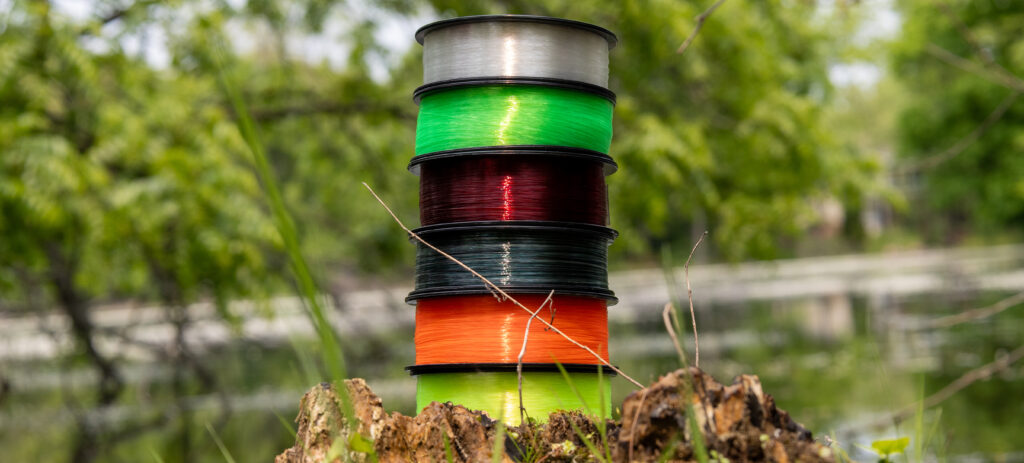
Monofilament fishing line is one of the most popular choices for anglers of all skill levels, thanks to its versatility, stretch, and affordability. However, using it incorrectly can cost you fish, decrease casting distance, and even damage your gear. In this guide, we’ll break down the five most common mistakes anglers make with monofilament line and provide practical tips to improve your fishing performance.
1. Choosing the Wrong Line Strength
Many anglers either overestimate or underestimate the appropriate pound-test for their target species. Using a line that’s too light increases the risk of break-offs, while a line that’s too heavy can reduce lure action and sensitivity.
Tip: Match your line strength to the fish you’re targeting. For small bass or panfish, 6–10 lb test is usually sufficient. For larger species like pike or catfish, 12–20 lb test provides extra security without sacrificing performance.
2. Not Replacing Old or Sun-Damaged Line
Monofilament line degrades over time due to UV exposure, friction, and repeated casting. Old line can lose strength, become brittle, and snap unexpectedly.
Tip: Replace your monofilament line at least once per season, or sooner if you notice discoloration, fraying, or rough spots. Store your spools in a cool, dark place to prolong their life.
3. Improper Knot Tying
Even the strongest monofilament line is only as strong as the knot holding it. Common mistakes include skipping the recommended number of wraps or tightening knots unevenly, leading to slippage or breakage.
Tip: Learn reliable knots such as the Palomar, Improved Clinch, or Uni knot. Wet the line before tightening to prevent friction heat from weakening the line.
4. Ignoring Line Memory and Twist
Monofilament can develop “memory,” causing loops, tangles, and reduced casting accuracy. Line twist, often caused by certain lures or spinning reels, can also lead to snarls and knots.
Tip: Regularly stretch new line before spooling it onto your reel. Consider using a swivel with lures that tend to spin, and periodically check for twists during your fishing session.
5. Using Monofilament in the Wrong Conditions
While versatile, monofilament isn’t ideal for every scenario. It stretches under load, which can reduce sensitivity when detecting subtle bites. In heavy cover or strong currents, its stretch can work against you.
Tip: Use monofilament for general-purpose fishing, topwater lures, or situations where shock absorption is beneficial. For maximum sensitivity or heavy-cover fishing, consider fluorocarbon or braided lines.
FAQ: Monofilament Line Tips for Beginners
Q: How long does monofilament line last?
A: With proper storage and limited UV exposure, monofilament can last 1–2 years. Replace sooner if it shows signs of wear.
Q: Can I mix monofilament with other lines?
A: Yes. Many anglers use monofilament leaders with braided main lines to combine sensitivity and strength.
Q: How often should I retie my knot?
A: After every significant catch or if the line appears worn. Knots are a common weak point in your setup.
Q: Is monofilament suitable for saltwater fishing?
A: Yes, but rinse your line after every saltwater trip to prevent corrosion and line degradation.
Q: What’s the best way to store monofilament spools?
A: Keep them in a cool, dark place away from direct sunlight to extend line life. Avoid extreme heat or humidity.
- Click here to buy: Braided Fishing Line
- Click here to buy: Monofilament Fishing Line
- Click here to buy: Fluorocarbon Fishing Line
- Click here to buy: Tackle Bags
