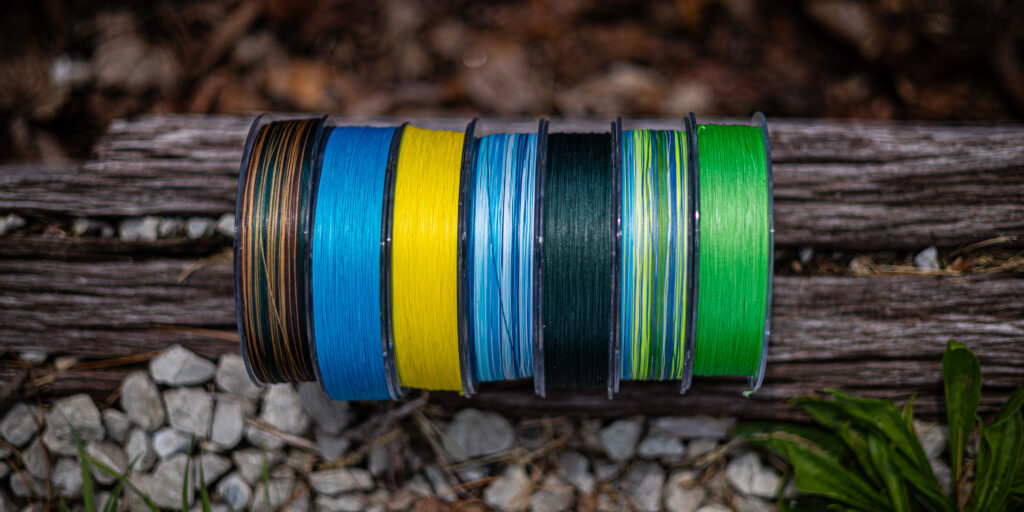
If you’ve been fishing long enough, you know that braided line has a story as rich and complex as the knots we tie. What started as a dependable workhorse material has evolved into a masterpiece of engineering — thinner, stronger, and more sensitive than ever before. I’ve fished through that evolution, and trust me, it’s been a wild ride.
The Early Days: Dacron and the Dawn of Braided Line
Back in the day, before the high-tech fibers we rely on now, Dacron was the gold standard. It was tough, dependable, and unlike monofilament, it didn’t stretch like a rubber band. For anglers chasing big saltwater species or deep-water monsters, that lack of stretch meant a better connection to the fish and the fight.
But Dacron had its limits. It soaked up water, frayed easily, and was thicker than today’s lines. Still, it laid the foundation — showing us that braided construction could outperform traditional monofilament in strength and sensitivity.
The Shift to Synthetic Super Fibers
Then came the revolution — the introduction of ultra-high-molecular-weight polyethylene (UHMWPE) fibers like Spectra® and Dyneema®. These fibers changed the game. Suddenly, we had lines that were stronger than steel for their diameter, yet smooth and flexible enough to cast a mile.
For me, that first time using modern braid felt like switching from a rowboat to a bass boat. The difference in casting distance, sensitivity, and strength was immediate. You could feel every rock, every bump, every fin flick on the other end. It brought finesse and power together — a rare combo that’s hard to beat.
Refining the Weave: Precision Engineering on the Water
Today’s braided lines are more than just strong fibers twisted together. Manufacturers have perfected multi-carrier weaves — 4, 8, even 12-strand braids — each offering a balance of abrasion resistance, roundness, and smoothness. Coatings and treatments now repel water, resist UV damage, and keep colors lasting longer, even after months in the sun and salt.
When I spool up modern braid, I know I’m using technology that’s been tested and refined by both engineers and anglers alike. It’s built for real-world fishing — whether you’re flipping jigs in heavy cover or trolling offshore.
Innovation That Builds Credibility
Here’s the thing — great fishing line doesn’t just happen. It’s born from years of trial, error, and listening to what anglers need. Every tweak in weave pattern, coating, and fiber blend comes from feedback on the water. We’ve broken fish off, tested knots till our hands cramped, and pushed prototypes to their limits — all to make sure what ends up on your reel can handle whatever you throw at it.
Looking Ahead: The Future of Braided Line
The evolution isn’t over. With advancements in nanotechnology and fiber science, braided lines are becoming even thinner, quieter, and more durable. Soon, we might see lines that adjust characteristics based on water temperature or UV exposure — sounds crazy now, but so did ultra-thin, 80-pound test back in the Dacron days.
From Dacron to cutting-edge braids, one thing’s remained constant: the pursuit of performance. As anglers, we demand gear that gives us an edge — and braided line has done just that, generation after generation. When I tie on a fresh spool, I’m not just loading my reel; I’m connecting to decades of innovation, passion, and craftsmanship that all started with a simple idea — make fishing better.
Final Thoughts
Braided line has come a long way, but its purpose remains the same — to give anglers an edge. Whether you’re finesse fishing for smallmouth in clear water or battling tuna offshore, today’s braid delivers a level of control and confidence that’s unmatched.
It’s not just fishing line — it’s a link between you, your gear, and the fish. Every cast, every fight, and every victory is built on decades of innovation and experience. And if you’ve ever set the hook with braid, you know that unmistakable feeling — pure, direct connection. That’s what keeps us chasing the next bite.
FAQs
Q: What’s the main advantage of braided line over monofilament?
A: Braided line has virtually no stretch, giving you incredible sensitivity and solid hooksets. It’s also much stronger for its diameter, allowing for more line capacity and longer casts.
Q: Does braided line work in both freshwater and saltwater?
A: Absolutely. Modern braids are designed for versatility — just match the line strength and coating to your environment. Saltwater anglers often go for higher strand counts and coatings for abrasion resistance.
Q: Can I use braid on a spinning reel?
A: Definitely. In fact, braid pairs perfectly with spinning setups because it reduces line twist and allows for smoother casting. Just make sure to use a bit of mono backing or tape to prevent slippage on the spool.
Q: Why do some anglers use a fluorocarbon or mono leader with braid?
A: A leader provides a bit of stretch, shock absorption, and stealth — especially in clear water. It’s a great way to combine the best of both worlds: braid’s strength and sensitivity with fluoro’s invisibility.
Q: How long does braided line last?
A: Unlike mono, braid doesn’t degrade quickly from sunlight or water. With proper care and occasional flipping (reversing it on the spool), quality braid can last several seasons.
- Click here to buy: Braided Fishing Line
- Click here to buy: Monofilament Fishing Line
- Click here to buy: Fluorocarbon Fishing Line
- Click here to buy: Tackle Bags

