Choosing the right fishing line can dramatically affect your success on the water. Whether you’re casting topwater lures or fishing deep cover, knowing when to use braid, monofilament, and fluorocarbon is crucial. This guide explains the advantages, ideal situations, and techniques for each line type so you can fish smarter and catch more.
Understanding Braided Fishing Line
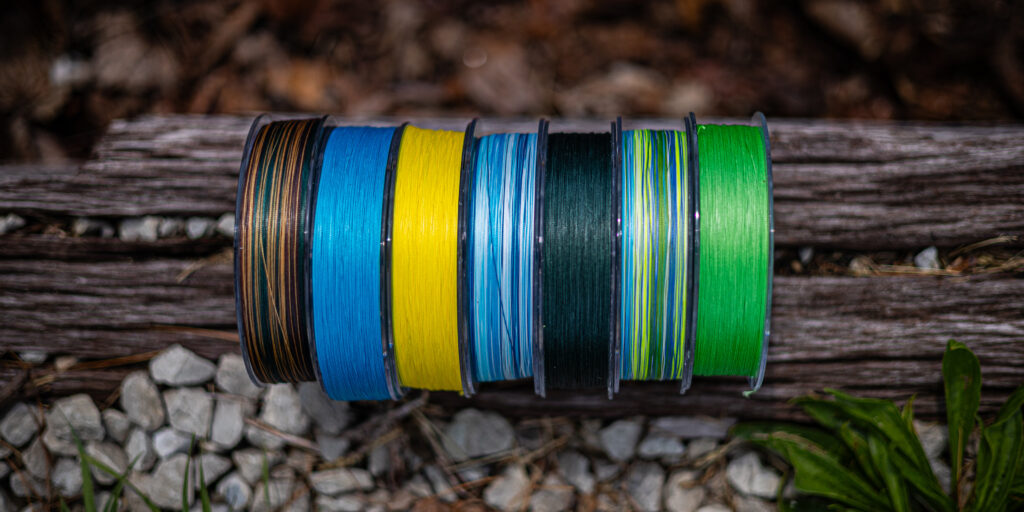
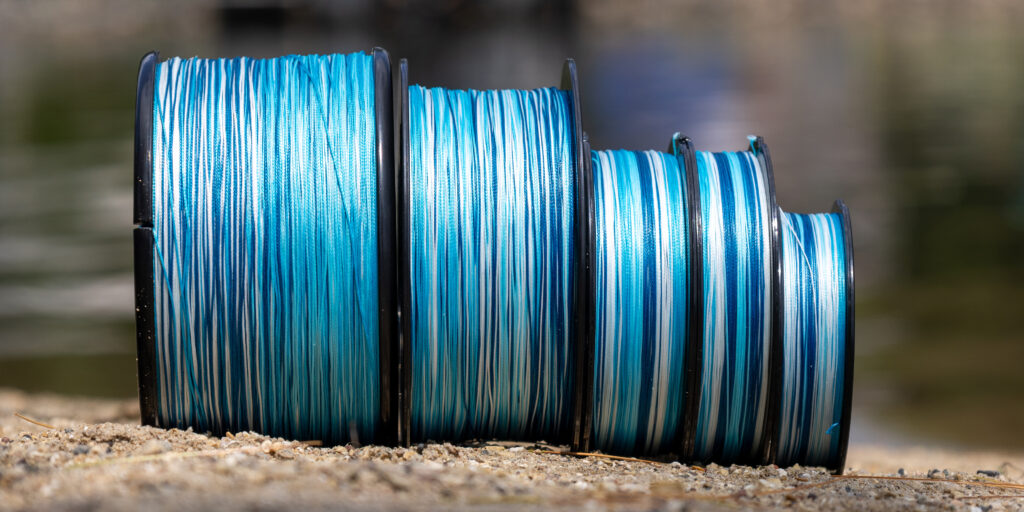
Braided line is made from multiple synthetic fibers woven together, resulting in a thin, strong, and highly durable line. Its most notable feature is almost zero stretch, which makes it extremely sensitive. This sensitivity allows you to detect subtle bites, feel underwater structures, and set hooks instantly.
Advantages of Braided Line:
- Exceptional strength-to-diameter ratio
- Near-zero stretch for maximum sensitivity
- Durable in heavy cover like weeds, brush, and timber
- Longer casting distances due to thin diameter
Disadvantages:
- More visible in clear water
- Can fray or cut hands if mishandled
- Requires proper knots to prevent slipping
Best Situations to Use Braided Fishing Line
- Fishing in Heavy Cover
Braid excels when pulling fish out of thick weeds, submerged trees, or brush piles. Its strength and low stretch make it the preferred choice for species like bass and pike. - Topwater Fishing
For frogs, poppers, and other surface lures, braid provides immediate hook-set power. The zero-stretch line ensures you feel the strike and can react faster than with mono or fluoro. - Long Casting or Deep Water Techniques
Braided line’s thin diameter allows for longer casts and deeper drops. Perfect for flipping, pitching, and deep water drop-shot techniques. - Windy or Fast Current Conditions
Braid slices through the air and water efficiently, reducing drag and helping maintain control in challenging conditions.
When Monofilament and Fluorocarbon Are Better
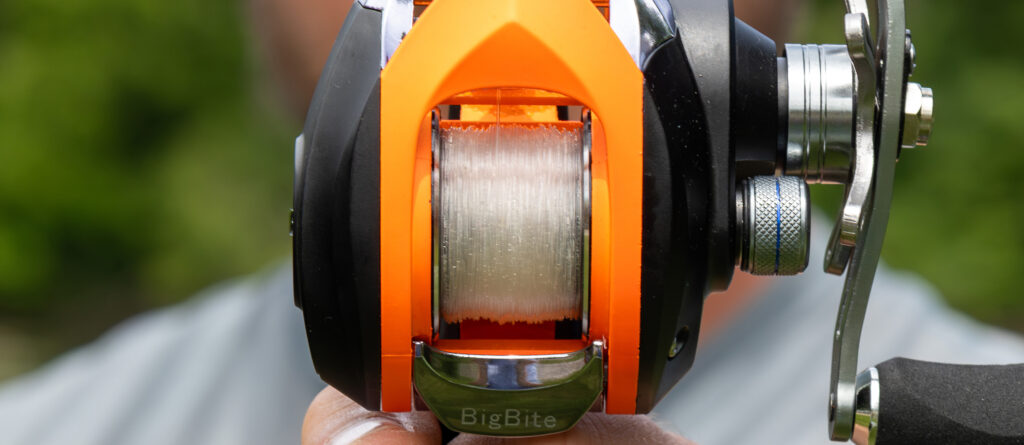
While braid has many strengths, monofilament and fluorocarbon lines have unique advantages that make them ideal in certain situations.
Monofilament Line
Pros:
- Stretchy and forgiving, reducing hook pull-outs
- Floats on the water, ideal for topwater baits
- Easy to handle and tie knots
Best Uses:
- Soft-plastic rigs where a little stretch prevents tearing the bait
- Topwater fishing for beginners
- Situations where stretch absorbs hard strikes
Fluorocarbon Line
Pros:
- Low visibility underwater due to light refraction similar to water
- Abrasion-resistant, protecting against rocks, logs, and structure
- Sinks faster than mono, ideal for deeper presentations
Best Uses:
- Clear water where line visibility could spook fish
- Drop-shotting, Texas rigs, or Carolina rigs in rocky or sandy bottoms
- Anywhere a stealthy presentation is key
Tips for Using Braided Line Effectively
- Use a leader: Pair braid with fluorocarbon or mono for stealth in clear water.
- Check your knots: Palomar or double uni knots work best with braid.
- Spool tension matters: Too loose causes tangles; too tight can damage the line.
- Match your rod and reel: Braid is most effective when paired with gear designed to handle low-stretch, high-sensitivity line.
FAQs About Braided Fishing Line
Q: When should I use braided line instead of mono or fluoro?
A: Use braid when you need strength, sensitivity, and control, especially in heavy cover, topwater action, or long casts. Mono and fluoro may be better for stealthy presentations, floating baits, or absorbing hard strikes.
Q: Can braid be used for topwater fishing?
A: Yes, its zero stretch allows for instant hook sets, making it ideal for frogs, poppers, and other surface lures.
Q: What is the best knot for braided line?
A: The Palomar knot and double uni knot are most reliable. Always moisten before tightening to reduce friction.
Q: How strong is braided line compared to mono or fluoro?
A: Braided line has a much higher strength-to-diameter ratio. A 20 lb braid may have the same diameter as a 10 lb mono, giving more strength and sensitivity.
Q: Does braid float or sink?
A: Braid is mostly neutrally buoyant or slightly floats. A leader may be used if sinking is necessary.
Q: How do I prevent fraying or damage to braided line?
A: Check for wear at knots and rod guides, use a leader in abrasive conditions, and replace line periodically after heavy use.
Q: Can braid be used on spinning reels?
A: Yes, but a mono backing helps reduce line slippage and wind knots.
- Click here to buy: Braided Fishing Line
- Click here to buy: Monofilament Fishing Line
- Click here to buy: Fluorocarbon Fishing Line
- Click here to buy: Tackle Bags

