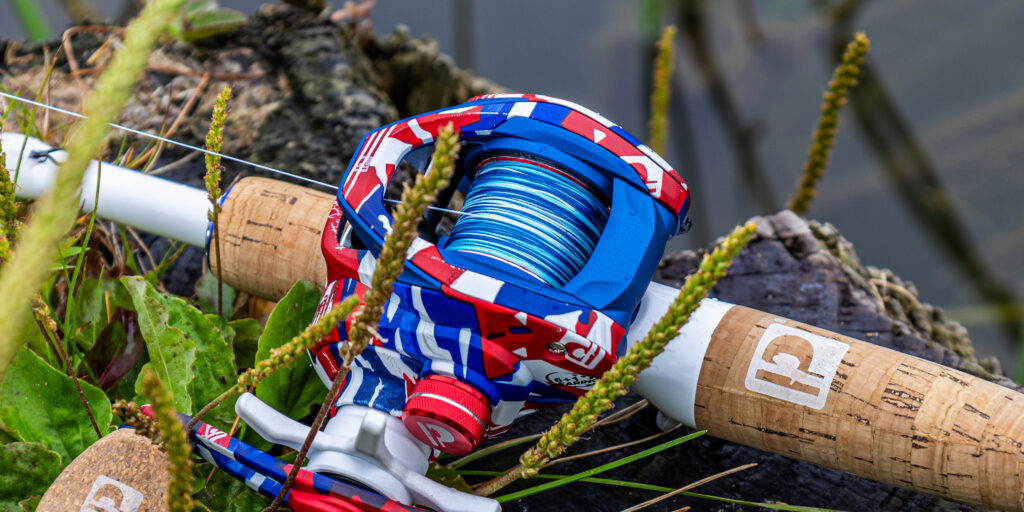
When it comes to explosive surface strikes, few techniques match the excitement of topwater fishing. But one question continues to spark debate among anglers: Should you use braid for topwater fishing?
Braided line offers unique advantages for certain topwater situations—but it also comes with drawbacks that can cost you fish if used incorrectly. In this guide, we’ll break down the pros, cons, and best practices of braid for topwater fishing so you can decide when it’s the right choice.
Why Line Choice Matters for Topwater Fishing
Topwater fishing is different from subsurface techniques. Your line directly affects:
- Lure action
- Hook penetration
- Fish landing percentage
- Casting distance
- Control around cover
Since topwater baits stay on the surface, buoyancy and stretch play major roles in performance.
Pros of Using Braid for Topwater Fishing
1. No Stretch = Instant Hooksets
Braid has virtually zero stretch, which means immediate power transfer on hooksets. This is especially useful when:
- Fishing long distances
- Using heavy cover presentations
- Targeting aggressive species
You won’t lose energy between rod and hook.
2. Superior Casting Distance
Because braid has a smaller diameter compared to mono of the same strength, it casts farther. That helps:
- Cover more water
- Reach schooling fish
- Maintain stealth from a distance
3. Excellent Performance in Heavy Cover
If you’re throwing frogs or buzzbaits into:
- Thick grass
- Lily pads
- Wood laydowns
Braid helps cut through vegetation and pull fish out before they bury themselves.
4. Long Lifespan
Braid lasts significantly longer than monofilament. It resists UV damage and maintains strength over time.
Cons of Using Braid for Topwater Fishing
1. No Shock Absorption
While zero stretch improves hooksets, it can also cause you to:
- Pull treble hooks free
- Tear hooks out of fish mouths
- Lose fish during head shakes
This is especially true with walking baits and poppers.
2. High Visibility
Braid is more visible on the surface than monofilament. In ultra-clear water, wary fish may notice it.
3. Can Affect Lure Action
For certain baits, especially lighter walking baits, braid can slightly alter movement due to stiffness and lack of stretch.
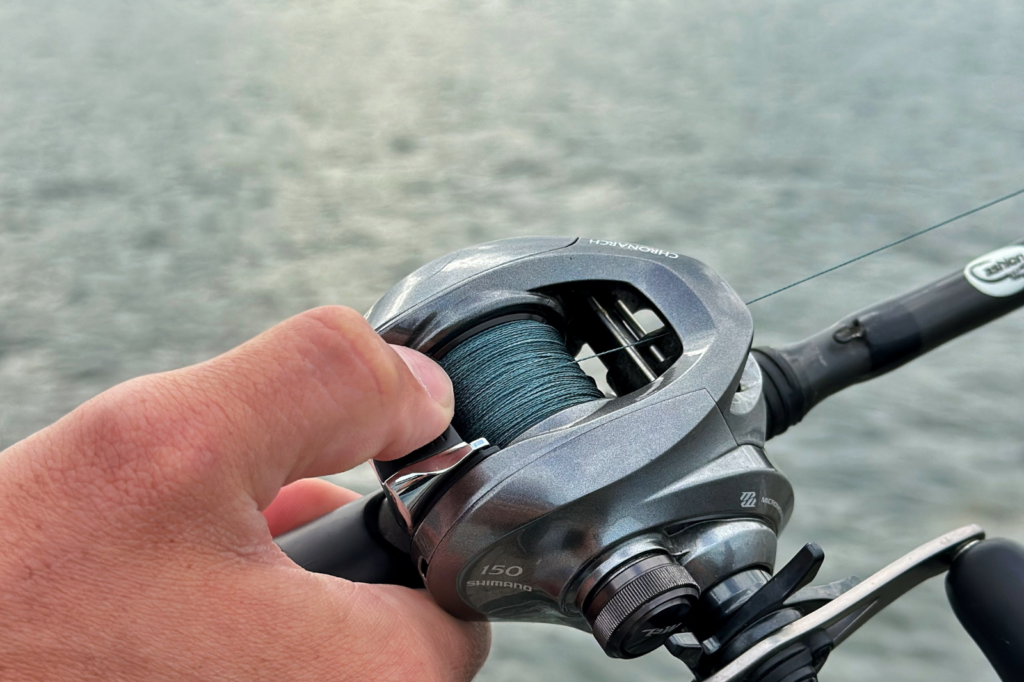
When to Use Braid for Topwater Fishing
Braid performs best in these situations:
Frog Fishing
- Heavy vegetation
- Thick mats
- Slop and pads
Recommended: 30–65 lb braid
Buzzbaits in Cover
- Around grass edges
- Shallow wood
Recommended: 30–50 lb braid
Long-Distance Walking Baits
- Schooling fish
- Open water scenarios
Recommended: 20–30 lb braid (paired with a softer rod)
When NOT to Use Braid for Topwater
Avoid braid when:
- Fishing small treble-hooked poppers in clear water
- Targeting pressured fish
- Needing shock absorption for aggressive strikes
In these cases, monofilament often provides better landing ratios.
Braid vs Monofilament for Topwater Fishing
| Feature | Braid | Monofilament |
|---|---|---|
| Stretch | None | Moderate |
| Buoyancy | Floats | Floats |
| Hookset Power | Very High | Moderate |
| Forgiveness | Low | High |
| Best For | Frogs, heavy cover | Treble-hooked baits |
For many anglers, the decision depends on bait type.
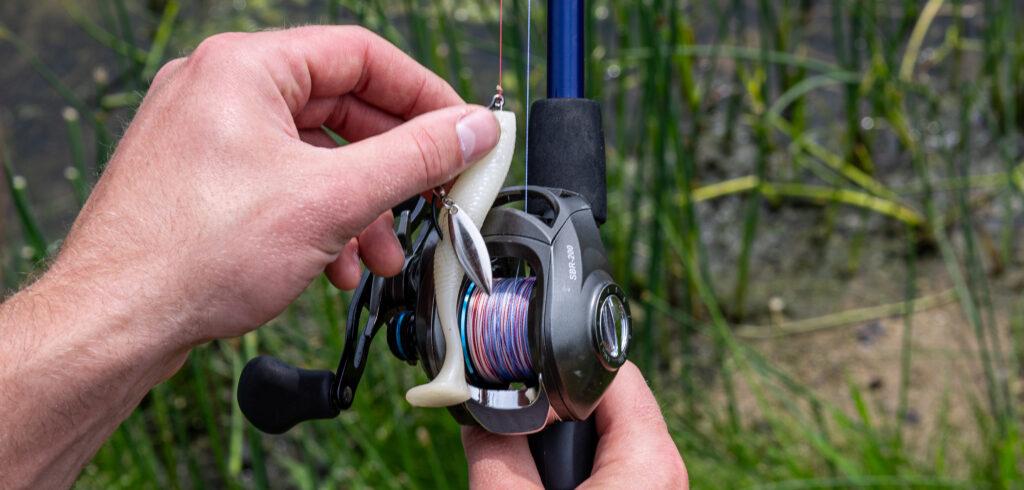
Best Practices for Using Braid on Topwater
1. Pair With the Right Rod
Use a:
- Medium-heavy rod for frogs
- Moderate-fast rod for walking baits
A softer rod helps compensate for braid’s lack of stretch.
2. Adjust Your Drag
Loosen drag slightly to:
- Prevent ripping hooks free
- Absorb sudden surges
3. Wait Before Setting the Hook
Especially with frogs:
- Wait until you feel weight
- Avoid reacting to splash alone
4. Consider a Short Leader (Situational)
In clear water:
- A short monofilament leader can improve stealth
- Only use for open-water topwater (not frogs in mats)
Recommended Pound Test for Braid in Topwater Fishing
- 20–30 lb: Open water walking baits
- 30–50 lb: Buzzbaits and heavier walking baits
- 50–65 lb: Frogs in heavy vegetation
Matching pound test to conditions improves efficiency and fish landing percentage.
Common Mistakes When Using Braid for Topwater
- Setting the hook too early
- Using too stiff of a rod
- Keeping drag too tight
- Using braid that’s too light in heavy cover
These mistakes often result in lost fish, not lost bites.
Frequently Asked Questions (FAQ)
Is braid good for topwater fishing?
Yes, braid for topwater fishing works extremely well in heavy cover and for frog fishing. However, it may not be ideal for small treble-hooked baits in clear water.
What pound braid should I use for topwater?
Use 20–30 lb for open water, 30–50 lb for moderate cover, and 50–65 lb for heavy vegetation and frog fishing.
Does braid float for topwater fishing?
Yes, braid floats, making it suitable for surface presentations.
Is mono better than braid for topwater?
Monofilament is often better for treble-hooked baits because its stretch improves landing percentage.
Should I use a leader with braid for topwater fishing?
In heavy cover, no leader is recommended. In clear open water, a short monofilament leader can improve stealth.
Final Thoughts
Using braid for topwater fishing can dramatically improve hooksets, casting distance, and control in heavy cover. But it requires the right rod setup, drag adjustment, and hook timing to avoid losing fish.
Understanding the pros, cons, and best practices allows you to choose the right line for each situation—so when that surface explosion happens, you’re ready to capitalize.
Click here to buy: Monofilament Fishing Line
Click here to buy: Braided Fishing Line
Click here to buy: Fluorocarbon Fishing Line
Click here to buy: Tackle Bags
