Bank fishing gives anglers the freedom to explore water without needing a boat—but it also requires a smarter approach to gear. With limited space and constant movement, having the right bank fishing tackle bag setup can make the difference between a frustrating day and a productive one.
Instead of carrying everything, successful bank anglers focus on efficiency, versatility, and organization. This guide breaks down exactly what to pack, how to organize it, and how to build the best tackle bag setup for bank fishing.
Why Your Bank Fishing Tackle Bag Setup Matters
Unlike boat fishing, you can’t rely on extra storage or backup gear. Everything you need must be:
- Easy to carry
- Quick to access
- Ready for changing conditions
A well-prepared tackle bag helps you:
- Cover more water efficiently
- Adapt to different depths and structures
- Spend more time fishing and less time searching
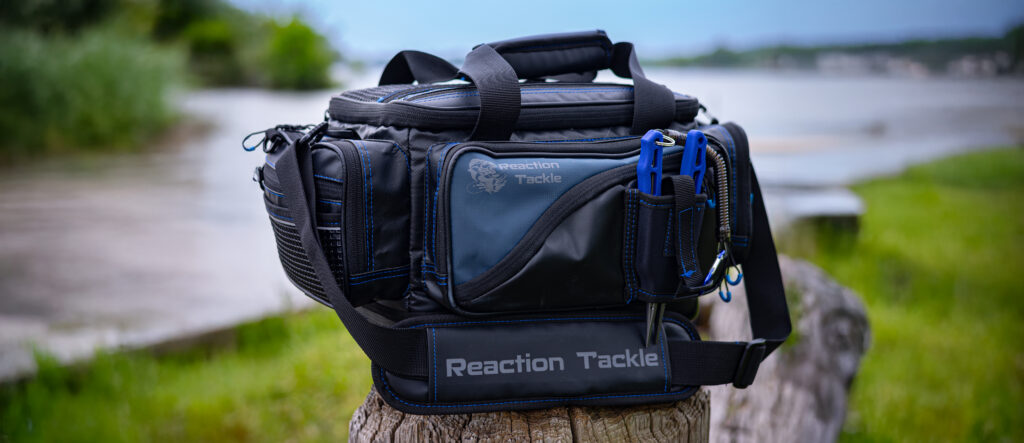
Core Bank Fishing Tackle Bag Essentials
Every effective bank fishing tackle bag should include a foundation of essential gear.
1. Terminal Tackle (Don’t Skip This)
Terminal tackle is one of the most important parts of your setup.
Must-have items:
- Hooks (variety of sizes)
- Bullet weights
- Split shot
- Jig heads
- Swivels or snaps
💡 Tip: Use a small, compartmentalized box so you can quickly find what you need.
2. Essential Tools
Without tools, even simple tasks become difficult.
Carry:
- Line cutters or scissors
- Pliers
- Hook remover
- Small measuring tape
💡 Keep tools in an outer pocket for quick access.
3. Fishing Line and Leaders
Bank fishing often involves rocks, wood, and brush that can damage line.
Always bring:
- A backup spool of fishing line
- Leader material (fluorocarbon or monofilament)
💡 This prevents wasted time if your line gets nicked or broken.
4. Versatile Lure Selection
You won’t know exactly what fish are doing, so versatility is key.
Moving Baits
- Spinnerbaits
- Crankbaits
- Swimbaits
Bottom Contact Baits
- Soft plastics
- Jigs
Topwater Lures
- Frogs
- Poppers
- Walking baits
💡 Choose lures that cover different depths and speeds.
Best Lures for Bank Fishing
Bank anglers should prioritize lures that perform well in unknown or changing conditions.
Soft Plastics
One of the most versatile options available.
Why they work:
- Can be rigged multiple ways
- Effective in shallow or deep water
- Great around structure
Spinnerbaits
Perfect for covering water quickly.
Benefits:
- Work in stained water
- Deflect off cover
- Trigger reaction strikes
Crankbaits
Help locate active fish fast.
Best choices:
- Squarebills for shallow water
- Medium divers for drop-offs
Topwater Lures
Great during:
- Early morning
- Evening
- Overcast conditions
They also help you quickly identify active fish near the bank.
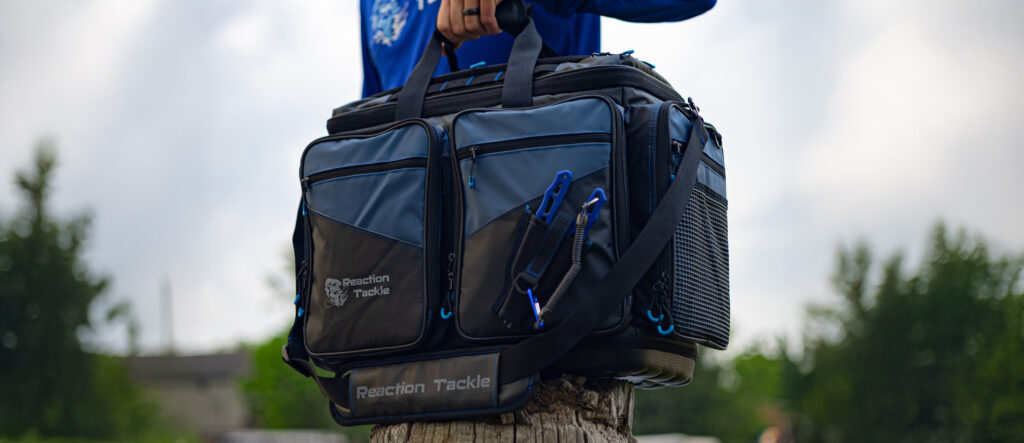
How to Organize a Bank Fishing Tackle Bag
Good organization saves time and increases efficiency.
Use a Compartment System
Separate your gear into categories:
- Hard baits
- Soft plastics
- Terminal tackle
- Tools
Pack by Technique
Grouping by technique makes decision-making faster:
- Reaction baits together
- Finesse baits together
- Topwater in one section
Keep Frequently Used Items Accessible
Items like:
- Pliers
- Favorite lures
- Line cutters
should be easy to grab without digging.
Ideal Bank Fishing Tackle Bag Setup (Simple & Effective)
A streamlined setup might include:
- 2 small lure boxes
- 1 terminal tackle box
- Soft plastic storage
- Pliers + cutters
- 1 backup line spool
This setup keeps weight low while covering most fishing scenarios.
Bank Fishing Packing Strategy
Focus on Versatility Over Quantity
Instead of packing dozens of lures:
- Choose a few that work in multiple conditions
- Cover all depths (top, mid, bottom)
Stay Mobile
A lighter bag allows you to:
- Walk farther
- Fish more spots
- Adapt quickly
Plan for Conditions
Before packing, consider:
- Water clarity
- Weather
- Target species
Common Bank Fishing Tackle Bag Mistakes
Avoid these mistakes:
Overpacking
Too much gear slows you down and makes organization harder.
Poor Organization
Disorganized bags waste time and cause missed opportunities.
Forgetting Terminal Tackle
Running out of hooks or weights can end your trip early.
Not Bringing Backup Line
Line damage is common—always be prepared.
Carrying Too Many Similar Lures
Focus on variety, not duplicates.
Extra Items That Make a Big Difference
Consider adding:
- Water bottle
- Sunscreen
- Polarized sunglasses
- Small first aid kit
- Lightweight rain jacket
These improve comfort and extend your fishing time.
Frequently Asked Questions (FAQ)
What is the best bank fishing tackle bag setup?
The best setup is lightweight, organized, and includes versatile lures, terminal tackle, tools, and backup fishing line.
How many lures should I carry for bank fishing?
Typically 6–12 versatile lures are enough to cover most situations.
What are the best lures for bank fishing?
Soft plastics, spinnerbaits, crankbaits, and topwater lures are among the most effective.
Should I carry extra fishing line?
Yes. A backup spool helps you recover quickly from line damage or break-offs.
How do I organize a bank fishing tackle bag?
Use compartments and group gear by type or technique for faster access.
Is a backpack or shoulder bag better for bank fishing?
Backpacks are better for long trips and mobility, while shoulder bags allow quicker access to gear.
Final Thoughts
A well-planned bank fishing tackle bag helps you stay efficient, mobile, and ready for anything the water throws at you. By focusing on essential gear, smart organization, and versatile lure selection, you can spend less time digging through your bag—and more time catching fish.
The goal isn’t to carry more gear—it’s to carry the right gear for the situation.
Click here to buy: Braided Fishing Line
Click here to buy: Monofilament Fishing Line
Click here to buy: Fluorocarbon Fishing Line
Click here to buy: Tackle Bags

