
Choosing the right setup isn’t just about the fishing line—it’s also about how that line behaves on different reels. When it comes to braid, the performance can change significantly depending on whether you’re using a spinning reel or a baitcasting reel.
Understanding braid for spinning reel vs braid for baitcaster setups helps prevent common issues like wind knots, backlashes, line digging, and poor casting performance.
This guide breaks down how braided line performs on each reel type, the advantages, drawbacks, and how to spool it correctly for the best results.
Why Braided Line Is So Popular
Braided line is widely used because it offers:
- Extremely high strength for its diameter
- Near-zero stretch for better sensitivity
- Long casting distance
- Excellent durability
But braid behaves differently depending on reel type—and that’s where technique matters.
Braid for Spinning Reels
Why Braided Line Works Great on Spinning Reels
Spinning reels are one of the most common setups for braid, and for good reason:
- Long, smooth casts with light lures
- No spool pressure issues like baitcasters
- Excellent sensitivity for finesse fishing
This makes braid for spinning reel setups extremely popular for bass, walleye, and panfish anglers.
Best Uses for Braid on Spinning Reels
Braid excels on spinning setups for:
- Finesse fishing (Ned rigs, drop shots)
- Light jigs
- Long-distance casting
- Clear water presentations (with leader)
Advantages of Braid on Spinning Reels
- No memory (reduces coil issues)
- Better casting distance with light lures
- Increased sensitivity for subtle bites
- Thin diameter for deeper lure penetration
Common Problems (and Fixes)
1. Wind Knots
Cause: Slack line during casting or retrieval
Fix: Maintain tension and avoid overfilling the spool
2. Line Twist
Cause: Improper lure rotation or no swivel use
Fix: Use a leader or swivel when needed
3. Line Slap
Cause: Too light braid or poor spool fill
Fix: Properly fill spool and match line weight to rod
Pro Tip for Spinning Reels
Always consider using a fluorocarbon or monofilament leader with braid for:
- Stealth in clear water
- Reduced visibility
- Better lure action
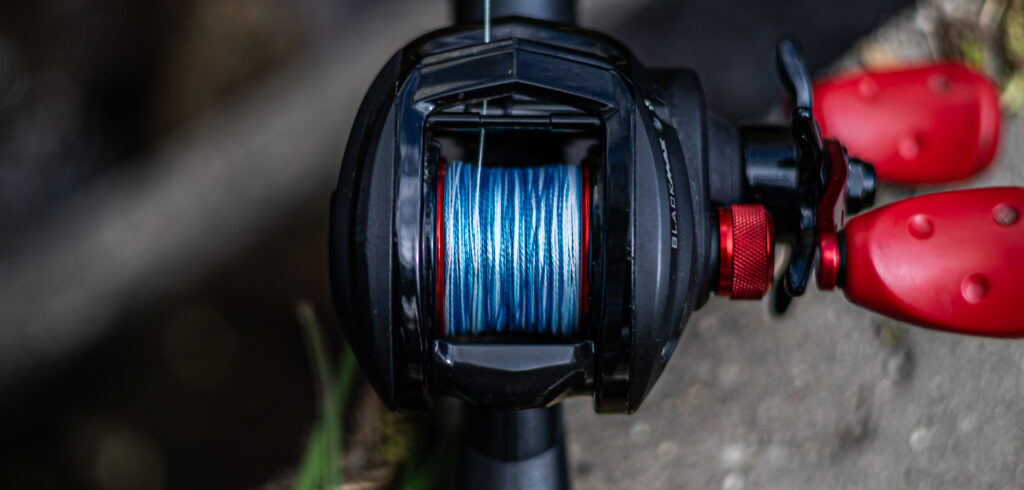
Braid for Baitcasting Reels
How Braided Line Performs on Baitcasters
Using braid on a baitcasting reel is extremely effective—but more technical.
Baitcasters allow:
- Better control in heavy cover
- Increased power for hooksets
- Precise lure placement
But braid requires proper setup to avoid issues.
Best Uses for Braid on Baitcasters
Braid for baitcaster setups is ideal for:
- Frogging in heavy vegetation
- Flipping and pitching
- Jigs and Texas rigs
- Heavy cover fishing
Advantages of Braid on Baitcasters
- Incredible pulling power
- No stretch for instant hooksets
- Excellent for heavy cover
- Strong abrasion resistance (when not damaged)
Common Problems (and Fixes)
1. Line Digging
Cause: Hard hooksets or tight drag
Fix: Use heavier braid and adjust drag properly
2. Backlash Sensitivity
Cause: Incorrect spool tension or brake settings
Fix: Dial in brakes and avoid overfilling spool
3. Sudden Break-Offs
Cause: Hidden abrasion or knots
Fix: Inspect line frequently and retie often
Pro Tip for Baitcasters
Braid shines when paired with:
- Heavy rods
- Fast actions
- Strong drag systems
This combination gives maximum power for pulling fish out of cover.
Braid for Spinning vs Baitcasting: Key Differences
| Feature | Spinning Reel | Baitcasting Reel |
|---|---|---|
| Casting Light Lures | Excellent | Moderate |
| Heavy Cover Fishing | Moderate | Excellent |
| Ease of Use | Easier | More technical |
| Line Management | Smooth | Requires tuning |
| Best Strength Use | Finesse setups | Power fishing |
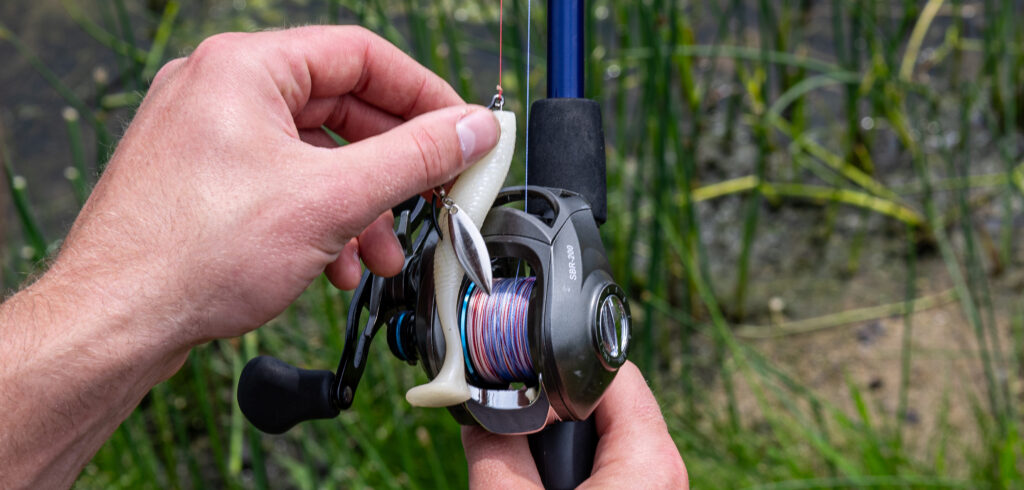
Choosing the Right Braid Setup
Use Braid on Spinning Reels When:
- Fishing finesse presentations
- Targeting clear water fish
- Using lightweight lures
- Long casting is important
Use Braid on Baitcasters When:
- Fishing heavy cover
- Using frogs, jigs, or Texas rigs
- Needing maximum pulling power
- Targeting big bass in structure
Matching Pound Test to Reel Type
Spinning Reels:
- 6–10 lb: finesse fishing
- 10–20 lb: general use
- 20–30 lb: heavier spinning setups
Baitcasting Reels:
- 30–40 lb: moderate cover
- 40–50 lb: heavy cover
- 50–65 lb: extreme vegetation or frogging
Common Mistakes with Braided Line
Avoid these issues:
- Overfilling spinning reels
- Using too light braid on baitcasters
- Ignoring leader use in clear water
- Improper drag settings
- Not checking for abrasion
These mistakes are responsible for most braid failures—not the line itself.
Frequently Asked Questions (FAQ)
Is braid better on spinning or baitcasting reels?
It depends on the application. Spinning reels are best for finesse fishing, while baitcasters excel in heavy cover.
Can you use braided line on a spinning reel?
Yes, braid is extremely popular on spinning reels, especially for finesse and light presentations.
Why does braid dig into baitcaster reels?
This happens when drag is too tight or when using too light of a line for heavy fish.
Do you need a leader with braid on spinning reels?
Often yes, especially in clear water or when fish are line-shy.
What pound braid should I use on a baitcaster?
Typically 30–65 lb depending on cover and technique.
What is the biggest advantage of braid?
Its strength-to-diameter ratio and sensitivity make it one of the most versatile fishing lines available.
Final Thoughts
Understanding braid for spinning reel vs braid for baitcaster setups helps you avoid common mistakes and unlock the full potential of braided line.
Spinning reels give you finesse and casting distance, while baitcasters deliver power and precision in heavy cover. When matched correctly, braid becomes one of the most effective tools in any angler’s setup.
The key isn’t just using braid—it’s using it on the right reel, for the right situation.
Click here to buy: Braided Fishing Line
Click here to buy: Monofilament Fishing Line
Click here to buy: Fluorocarbon Fishing Line
Click here to buy: Tackle Bags

